Meet Jessica Fink, LCSW-S
I believe sleep deserves its own treatment.
I am licensed to practice in Texas and provide therapy to adults (18+) only. All sessions are conducted via online therapy on a secure, HIPAA-compliant platform.
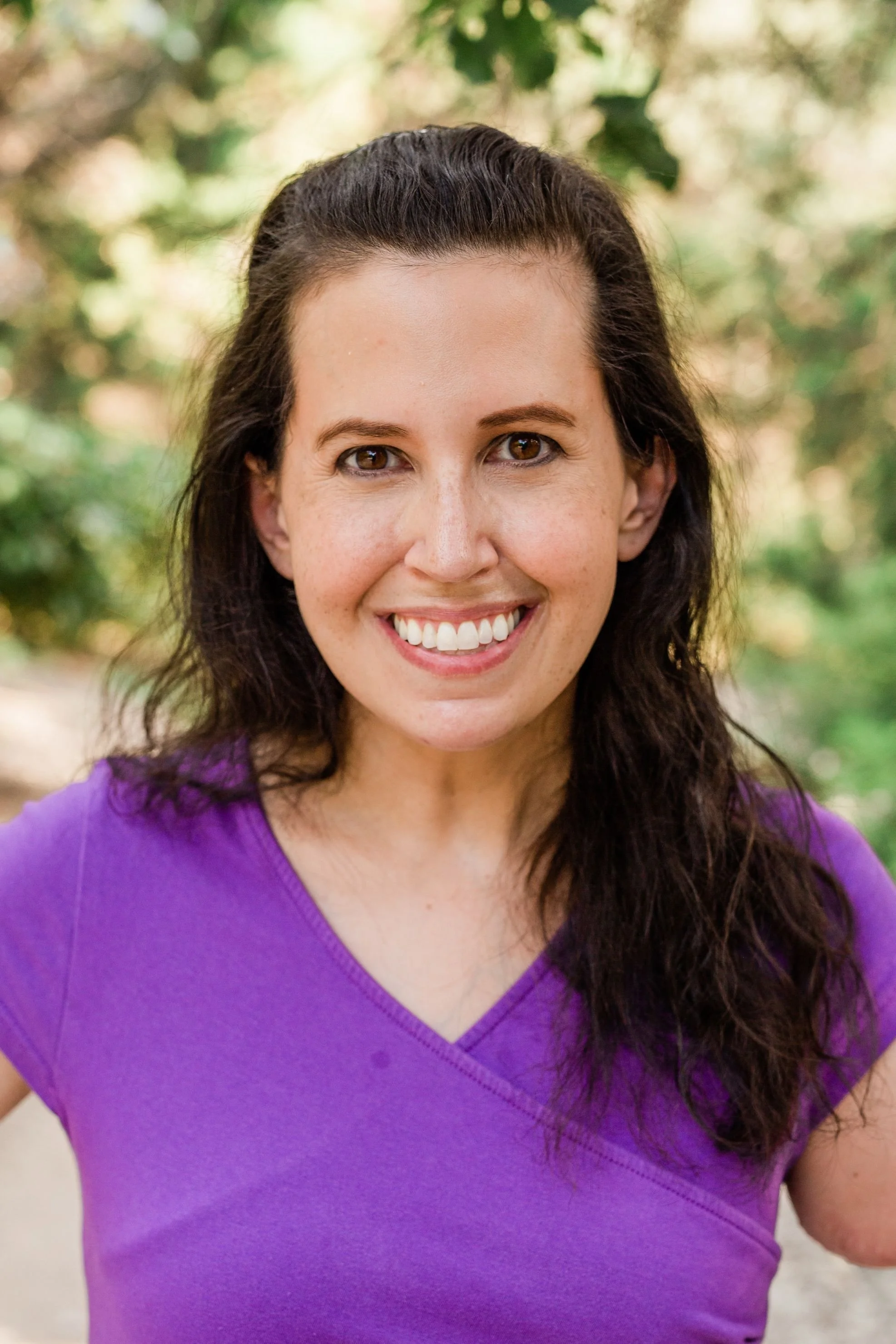
Jessica Fink, LSCW-S (Texas license #50905) is a member of the American Academy of Sleep Medicine and the Society of Behavioral Sleep Medicine. She has basic and advanced CBT-I training as well as specialized training in circadian rhythm disorders, nightmares, and behavioral tools for hypersomnia and sleep apnea.
I was an insatiably curious child. I drove the adults in my life crazy with all the questions. One year, for my birthday, my parents gave me a book called My Big Book of "Tell Me Why?" As an adult, not much has changed. I would be a professional student if that were a viable way to earn a living.
I also genuinely love teaching. Both of my parents were teachers, and I think some of that found its way into me. Whether I'm working one-on-one with clients, giving presentations, creating YouTube videos, or developing handouts, one of my favorite things to do is take something complicated and make it understandable.
There's something deeply satisfying about hearing "I've never heard it explained that way."
Why I Chose Behavioral Sleep Medicine
I've seen sleep problems throughout my 19-year mental health career, the bulk of which was spent at Seton Shoal Creek Hospital in Austin. People usually weren’t coming to therapy because of their sleep. They came for depression, anxiety, chronic pain, or trauma. But disrupted sleep was almost always part of the picture.
And I kept noticing the same thing: Poor sleep made everything else harder to treat.
At the time, though, I didn't know much about treating sleep directly. Like many therapists, my toolkit was pretty limited: hand out a sleep hygiene sheet and encourage someone to talk with their doctor.
Then, in 2021, a continuing education brochure landed in my mailbox advertising a training in Cognitive Behavioral Therapy for Insomnia (CBT-I). Therapists get advertisements for continuing education courses all the time. Most of them go straight into the recycling bin. This one didn't.
Until then, I had no idea there was a specialized, evidence-based psychological treatment for insomnia. Once I realized there was—and that it was something I could provide as a therapist—I signed up. I started offering CBT-I in my practice and quickly discovered something unexpected.
When you open your door to insomnia, all the other sleep disorders walk in too. Some people who thought they had insomnia actually had a delayed body clock. Others had untreated sleep apnea in addition to their insomnia. Still others were struggling with recurring nightmares or hypersomnia. The more I learned, the more I realized these conditions couldn't all be approached the same way.
Different sleep problems require different treatments.
So I kept learning. One training led to another. One consultation led to another. Eventually, what started as adding one new service became a practice devoted entirely to Behavioral Sleep Medicine. And I’ve now worked with hundreds of adults navigating insomnia, nightmare disorder, narcolepsy, idiopathic hypersomnia, circadian rhythm disorders, and CPAP frustration.
My Approach to Change
One of the reasons Cognitive Behavioral Therapy resonates with me is that it starts from the assumption that behavior makes sense in context. Rather than asking, "What's wrong with this person?" we're asking, "What function is this behavior serving?"
Every behavior, whether healthy or unhealthy, involves a tradeoff of pros and cons. There’s always a reason someone is doing what they’re doing.
That perspective shapes the way I approach sleep disorders. Before we try to change a pattern, I want to understand why it developed in the first place.
That said, the other thing I appreciate about CBT is that it is practical and forward-looking. We don’t have to delve too deep into the past to address your sleep disorder. We just focus on moving ahead.
How I Think About Therapy
I see it as combining two different types of expertise.
You are the expert on your life, your experiences, and your goals. I'm the expert in Behavioral Sleep Medicine. The work happens when we put those two together.
My job isn't to tell you how to live your life. My job is to help you understand your options, explain what the research tells us, and think through how that information applies to your situation. Ultimately, you're the one who lives with the consequences of those decisions. I think you deserve the information you need to make them.
What a First Session Looks Like for a New Sleep Client
I’m a fan of structured, standardized tools. In addition to assessing for any mental health concerns, like depression or anxiety, our first session will be reviewing the intake form I have you complete before the session, which is based on the Structured Clinical Interview for Sleep Disorders. This helps me rule in or out a variety of sleep disorders, and it’s not uncommon to have more than one. It also helps me plan and sequence our work together as well as make appropriate referrals. Then I’ll get you going on a sleep diary.
Every sleep disorder has an evidence-based protocol for treating it, and most of the treatments are brief (4-8 sessions).
Education, Credentials & Experience
Education
Master of Social Work
Texas State University, 2007
Social workers are trained to conceptualize cases using something called “person-in-environment,” which means I can’t fully understand you without taking into account the broader social, cultural, economic, and physical contexts in which you exist.
Credentials
Jessica Fink, LCSW-S
Licensed Clinical Social Worker – Supervisor
The supervisor designation means I am board-approved to supervise newer therapists pursuing advanced licensure.
Experience
Social Worker at Seton Shoal Creek Hospital, 2007-2021
Private practice 2021-present
In the Media

I have been featured discussing what gets in the way of good sleep in outlets including Forbes and VeryWellMind.
I have also discussed sleep interventions on podcasts like Modern Therapists’ Survival Guide.
See my full media kit for additional features.
Professional Training & Affiliations
Behavioral sleep medicine is a specialized field, and I believe ongoing learning is an important part of providing effective care.
In addition to my clinical experience, I have pursued specialized training in evidence-based behavioral treatments for sleep disorders, including:
Cognitive-Behavioral Therapy for Insomnia (CBT-I)
Basic training with Dr. Colleen Carney and Dr. Meg Danforth
Advanced training with Dr. Donn Posner, Dr. Michael Perlis, and Dr. Jason Ellis through University of Pennsylvania
Cognitive-Behavioral Therapy for Nightmares (CBT-N)
Training and consultation with Dr. Joanne Davis
Cognitive Behavioral Therapy for Hypersomnia (CBT-H)
Training and consultation with Dr. Jason Ong
Additional Sleep Medicine Training
Circadian rhythm disorders and PAP adherence consultation with Dr. Donn Posner
Continuing education through the Society of Behavioral Sleep Medicine
Continuing education through the University of Arizona Sleep and Health Research Program
Professional Memberships
American Academy of Sleep Medicine
Society of Behavioral Sleep Medicine
I attend both organizations’ annual conferences and participate in ongoing consultation with Dr. Donn Posner and continuing education to stay current with developments in behavioral sleep medicine. These opportunities help me stay on top of emerging research and best practices in sleep disorder treatment.
A Little Bit About Me (the human side)
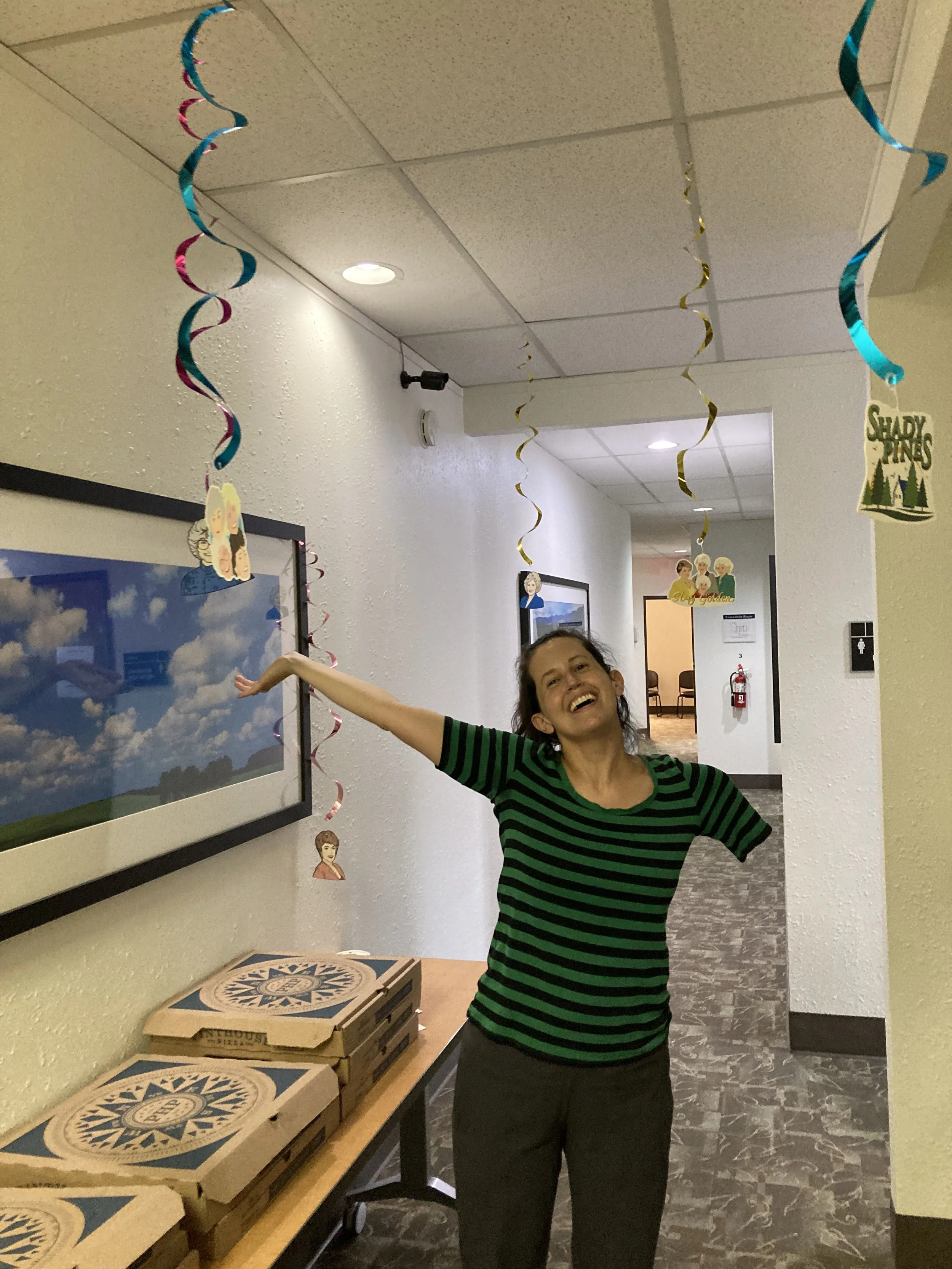
On my last day at Seton, I came in to find a coworker had hung Golden Girls themed decorations up to send me off right!
Outside of work, you'll probably find me watching The Golden Girls, listening to '90s alternative rock, or attending musical theater shows. Those interests occasionally make their way into session.
If I can use a sitcom episode, a Broadway lyric, or a pop culture reference to make a sleep concept click, I'm probably going to do it. Because learning should be memorable.
And I've learned that people tend to remember a concept better when it's attached to a story, a song, or a familiar character.
Let's Work Together
If my approach resonates with you, I'd love to help you make sense of what's happening with your sleep. I hope you leave with a clearer understanding of how your sleep works, why we've chosen the treatments we've chosen, and the confidence to keep using that knowledge long after therapy ends.