The Beginner's Guide to Starting CPAP
How to Get Used to CPAP (And Why It Can Be Harder Than You Expected)
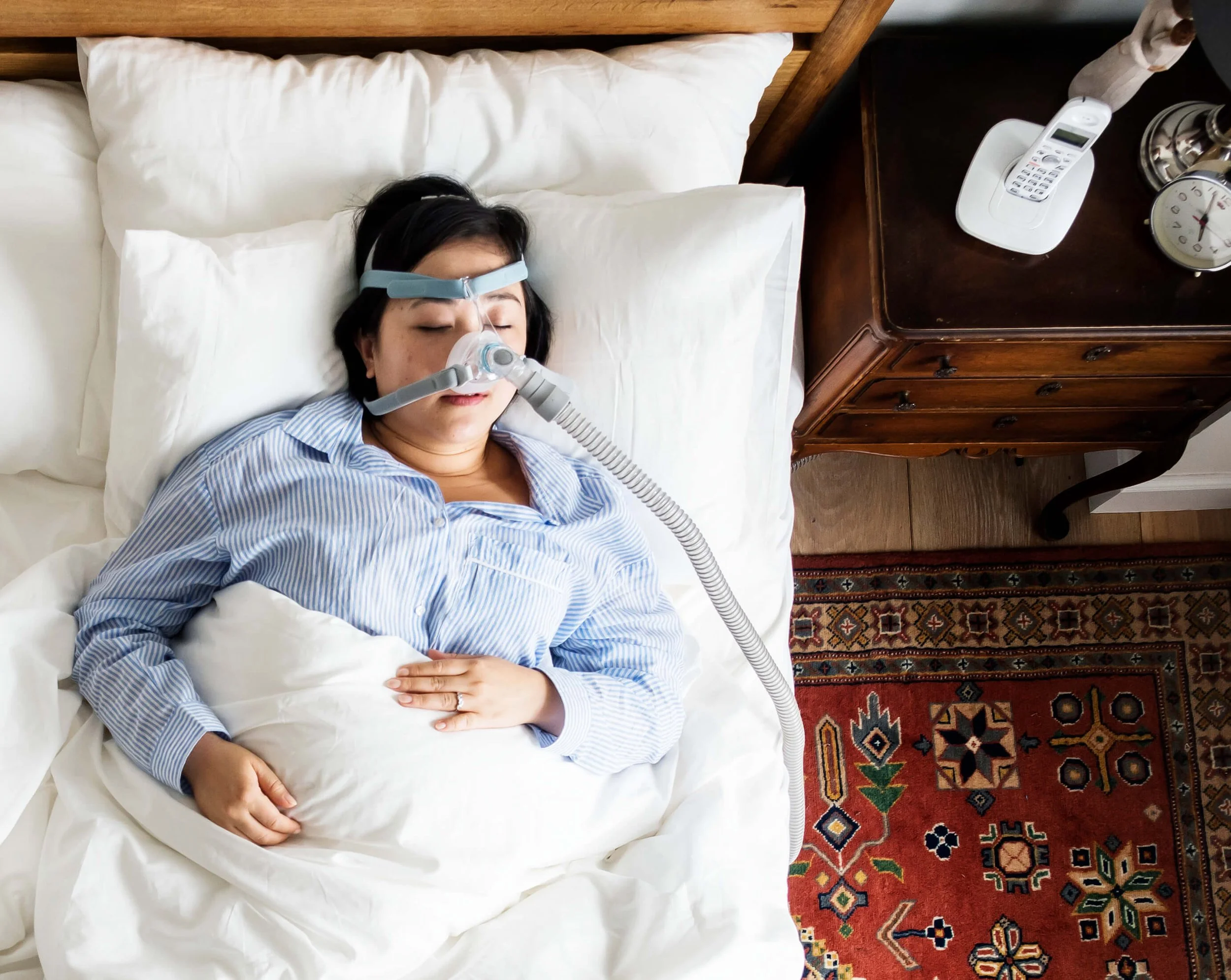
Starting CPAP therapy can feel overwhelming at first, but most early challenges have practical, treatable solutions.
Why Is It So Hard to Get Used to CPAP?
You would think getting diagnosed would be the hardest part. I'm not saying that process is easy. Scheduling appointments, dealing with insurance, completing the sleep study itself. Hoops and hoops to jump through, usually. But now you've been diagnosed with sleep apnea and prescribed this thing called CPAP.
The quality of instruction and support people receive after diagnosis varies tremendously. Some people leave their appointments feeling informed and supported. Others go home with a machine, a quick demonstration, and a lot of unanswered questions. And now you're expected to sleep every night with this wacky thing blowing pressurized air into your nose or mouth.
Getting used to CPAP involves more than simply forcing yourself to wear the mask every night. There are usually a host of mechanical problems to troubleshoot at the outset, such as mask fit, leaks, and humidity. But even once you’ve tackled all of that, CPAP can still be difficult to tolerate. Barriers might include anxiety or claustrophobia, co-occurring insomnia, the emotional process of adjustment to a chronic condition, or mixed feelings about using CPAP. Each of these problems requires a different solution.
Given the hundreds of masks available on the market, there's often an annoying amount of trial and error involved in finding one that fits comfortably, doesn't leak, works well with your sleeping position, and has the right pressure and humidity settings.
Many people assume they have to stick with the first mask they're given. You don't.
In fact, I encourage all of my clients to be a squeaky wheel with the durable medical equipment (DME) company if needed. If the first mask isn't comfortable, leaks excessively, or simply isn't a good fit, ask to try another one. And if that one doesn’t work, ask for another one. Keep bugging them until you have something that works for you.
But wait, there’s more. Once you’ve got the right mask, you might be dealing with gas, skin irritation, dry mouth, rainout, pressure adjustments, and all the other fun side effects.
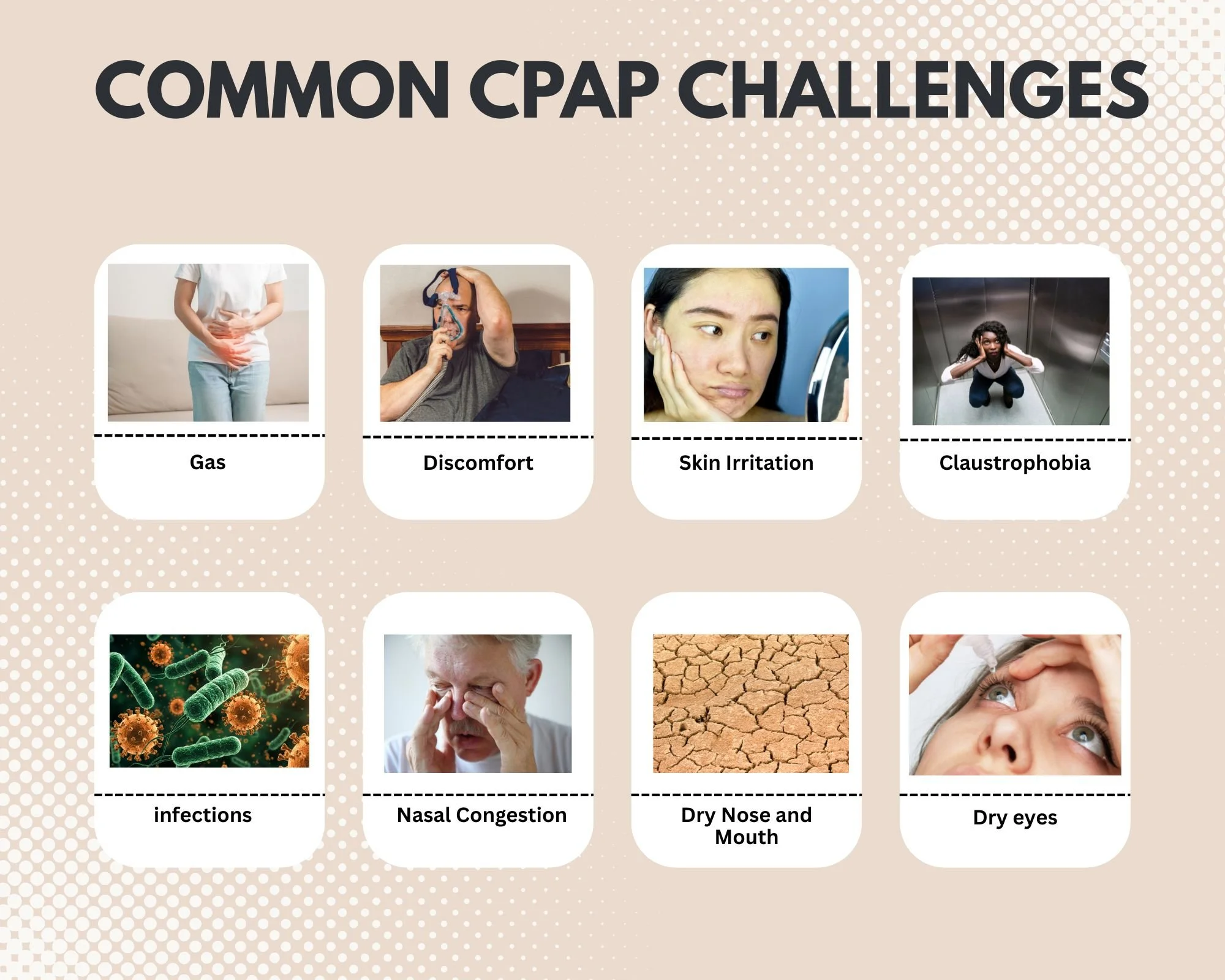
Many early CPAP challenges are common and often have practical solutions. Identifying the specific problem is the first step toward making CPAP more comfortable and sustainable.
Oh, and this thing has to be cleaned how often?!
Great. Another #$^&@*% thing to do.
And then there’s the stigma some people feel about wearing one of "those Darth Vader machines." What if my partner no longer finds me attractive or my kids make fun of me? How am I going to date or travel with this thing?
Believe it or not, though, I've had many clients eventually describe their CPAP as "my best friend."
Once they get through those early obstacles—and yes, there are many—they become completely different people. They're finally getting restorative sleep for the first time in years. They have more energy. Their concentration improves. They're no longer falling asleep in meetings or while watching television. Their partners are commenting that they seem like themselves again.
Having Problems With CPAP? Rule Out Equipment Issues First
Start by ruling out equipment issues with your doctor and/or the DME company. Many of these problems can be fixed by adjusting the equipment rather than trying harder to tolerate it. That said, once all those practical issues have been resolved, barriers can remain that aren’t talked about nearly enough. They're less obvious than a leaking mask, but they often determine whether someone gives up on CPAP or successfully makes it part of their life.
Over my years of specializing in sleep disorders, I've noticed these non-mechanical challenges tend to fall into four broad categories. Once we know which barrier we're dealing with, the next steps become much clearer.
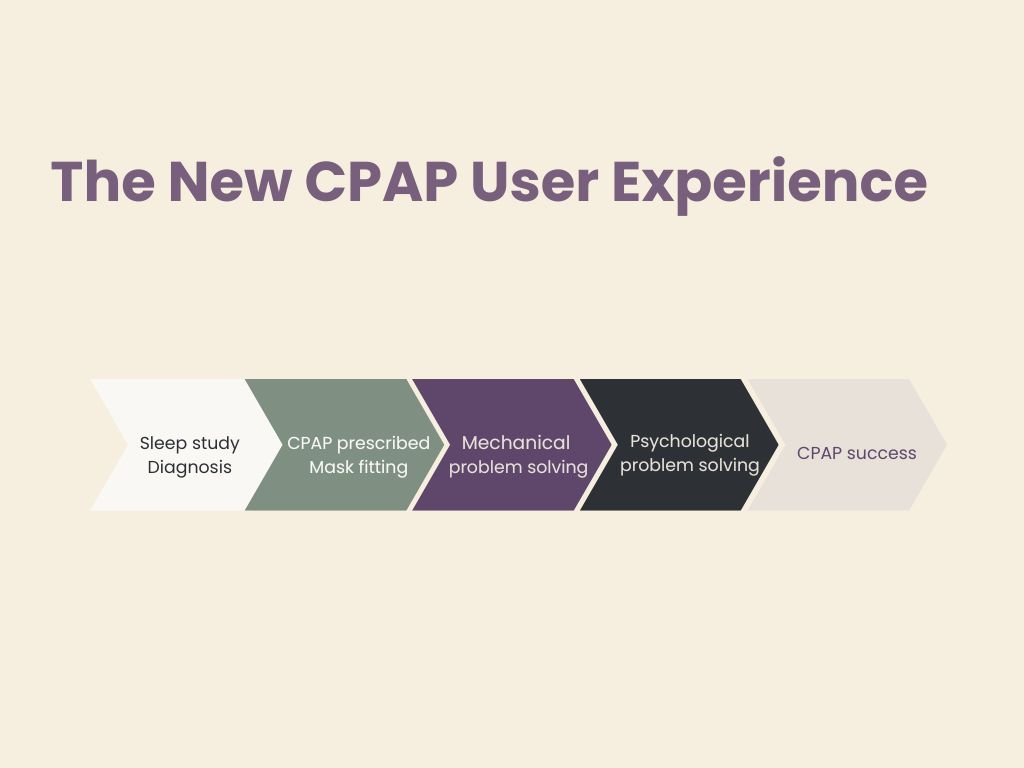
Most people don't adjust to CPAP overnight. Long-term success usually comes from addressing both equipment issues and the psychological barriers that can make treatment difficult.
The Four Hidden Barriers to CPAP Success
Barrier #1: CPAP Anxiety or Claustrophobia

I eventually adjusted to this thing and had a great time in the ocean. The same gradual approach can help many people adjust to CPAP.
For some people, CPAP isn't just uncomfortable. It's threatening. If you feel anxious or claustrophobic every time you put the mask on, how can you expect to fall asleep or even wear it for any length of time? Feeling trapped, struggling with the sensation of air pressure, or becoming hyperaware of your breathing are all pretty incompatible with sleep. If the equipment itself is working properly, gradual exposure can help you get used to wearing the CPAP mask without forcing yourself through overwhelming anxiety.
I remember the first time I went snorkeling. Once my face was in the water, I started hyperventilating. I felt like I couldn’t breathe. Except I knew I could breathe. I kept thinking, “I know I can breathe, so why can’t I breathe?” My brain just wasn’t getting the memo somehow because I was having to breathe through this unfamiliar device. Plus, I think the open ocean is an unnatural habitat for someone who grew up on the plains of West Texas.
Restricted facial movement and unfamiliar air pressure can easily be perceived as threats by our brains. Couple this with the fact that this unfamiliar situation is happening at night when we naturally feel more vulnerable. And some people are just more inclined toward claustrophobia.

At Barton Springs, some people jump right in while others ease into the cold water a little at a time. Adjusting to CPAP often works the same way—gradual exposure can be more effective than forcing yourself through the discomfort.
In Austin, a popular spot to hang out in the summer is Barton Springs Pool. The water temperature is 68-70 degrees year-round (this is cold for a Texan). There is a long-standing debate about the best way to get into Barton Springs. Some advocate jumping in all the way and tolerating that initial shock to the system. But that method doesn’t work for everybody. Some people ease their way in gradually and adjust little by little. We all end up in the pool no matter how we got in.
We can do that with your CPAP mask. There is an established, step-by-step process for CPAP desensitization that gradually helps you get used to wearing the mask. If anxiety or claustrophobia is the main obstacle, the solution isn't forcing it.
It's gradual exposure, the same basic approach we use to treat other phobias.
Barrier #2: You Can't Sleep With CPAP Because You Also Have Insomnia
If you can't sleep with CPAP, there may be another variable at play. Insomnia and sleep apnea commonly occur together, a combination known as COMISA (comorbid insomnia and sleep apnea). Treating the sleep apnea with CPAP doesn't necessarily treat the insomnia.
CPAP is ultimately a breathing treatment, not a sleep treatment. It uses pressure to keep your airway open so you don’t stop breathing in your sleep. That will do nothing to address any insomnia that has shown up along the way.
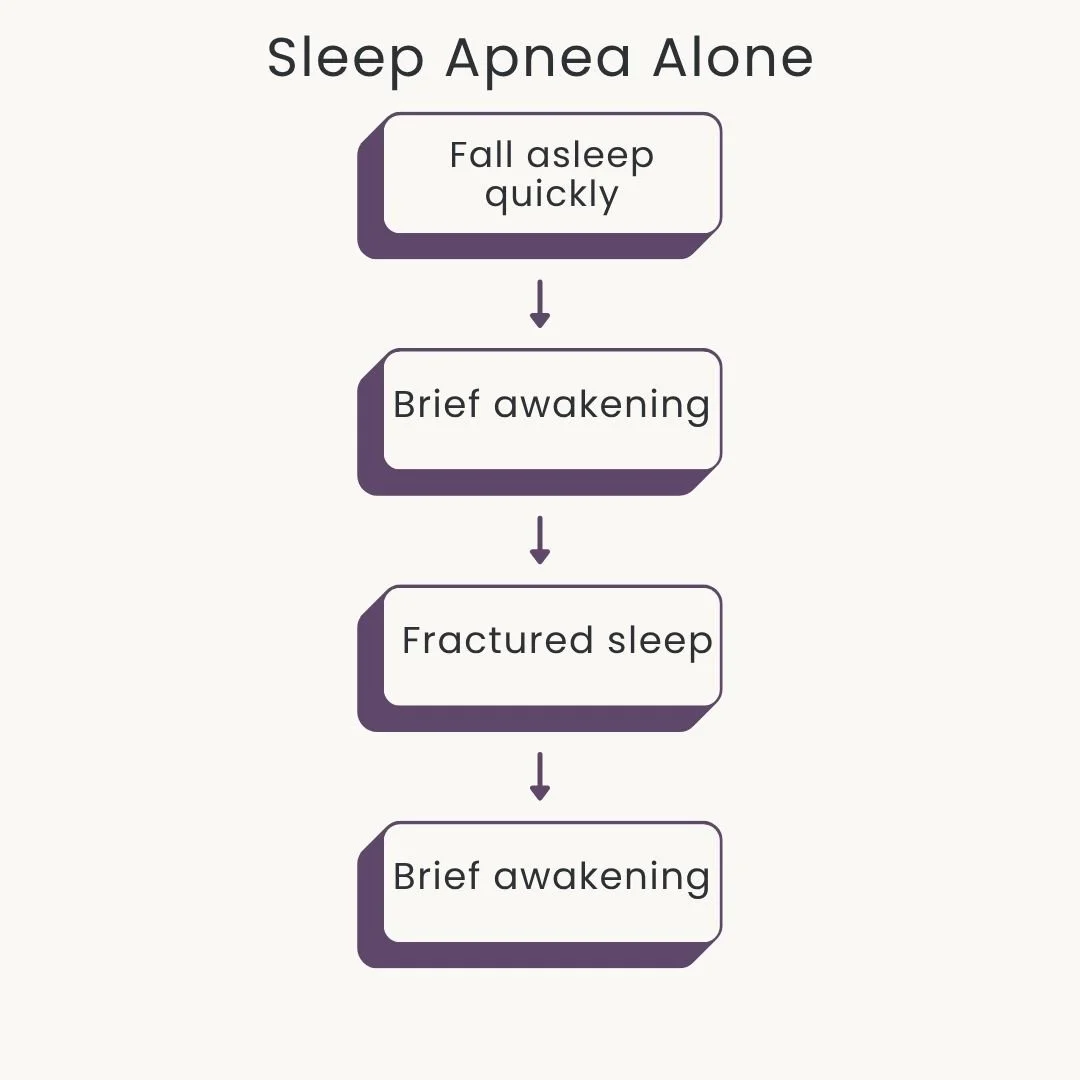
People with sleep apnea alone often fall asleep without difficulty but experience repeated brief awakenings caused by breathing interruptions.
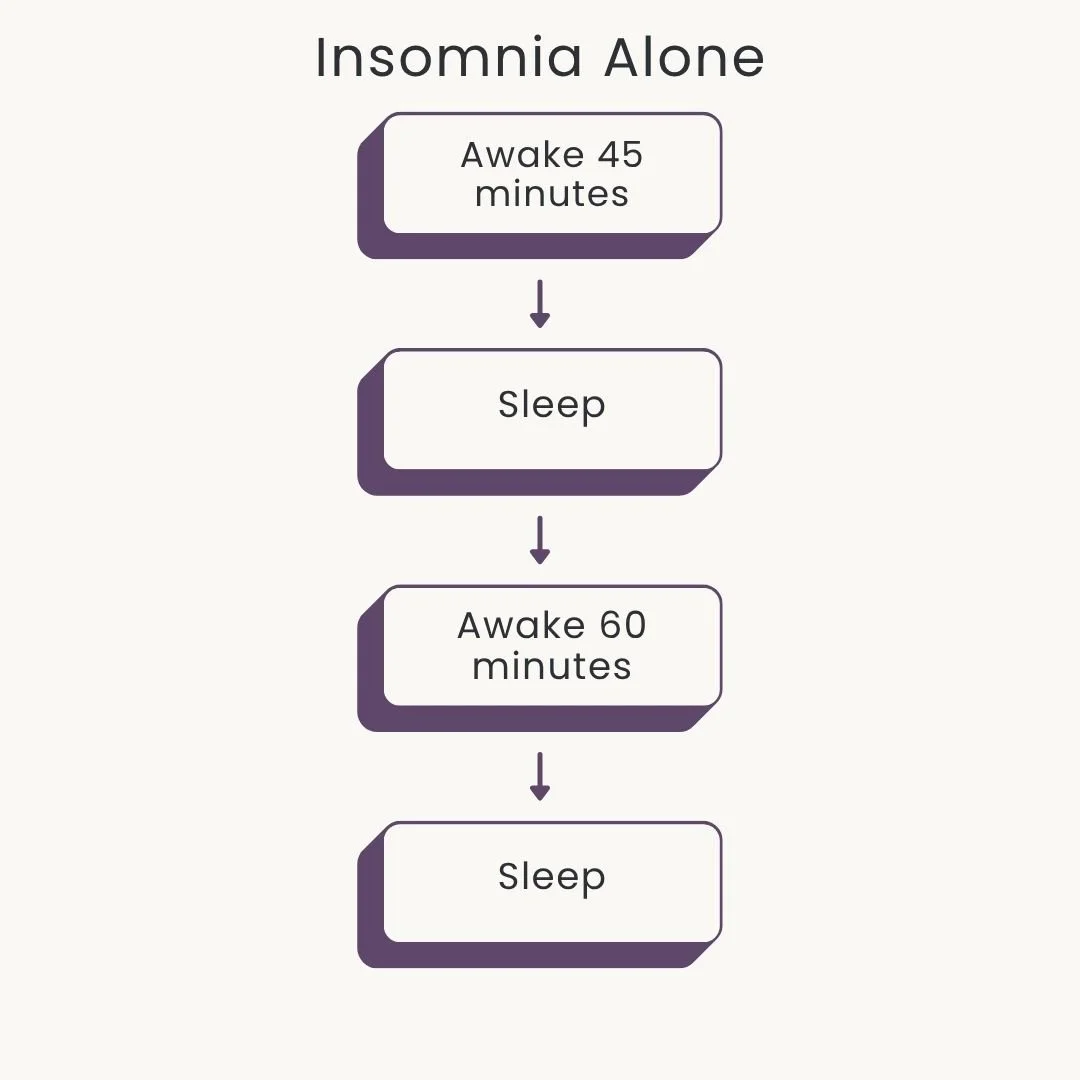
Unlike sleep apnea, insomnia is characterized by prolonged periods of wakefulness and difficulty returning to sleep, requiring a different treatment approach.
In a person with only sleep apnea, their night tends to look like this: fall asleep quickly, have short awakenings throughout the night, able to return to sleep quickly after awakening, may or may not remember the awakenings.
In a person who also has insomnia, you’ll see long blocks of time awake either at the start of the night or over the course of the night. Further, someone with insomnia will develop a lot of anxiety about their sleep and exert a lot of effort to fix it.
Insomnia isn't happening simply because you stop breathing. It's a distinct problem, and it may need its own treatment.
The gold standard treatment for insomnia is Cognitive Behavioral Therapy for Insomnia (CBT-I), which helps retrain the brain and body to sleep again. For some people with both insomnia and sleep apnea, addressing the insomnia is an important part of becoming comfortable and consistent with CPAP.
Barrier #3: Adjusting to CPAP Means Adjusting to a Chronic Condition
For many people, starting CPAP isn't just an adjustment to a piece of equipment. It's getting used to the idea of managing your sleep apnea over the long term. That can prompt frustration, embarrassment, grief, or resistance—even when you understand why treatment is important.
While normal, these emotional reactions often receive very little attention during busy medical appointments.
Some people hope sleep apnea can be fixed with surgery or losing weight. And sure, some people do lose their apnea after an operation or weight loss. But not everybody is a candidate for surgery, and not everyone’s apnea is tied to their weight to begin with. For many, sleep apnea is something you’ll tend to rather than cure.
When you get strep throat, you take antibiotics to get rid of it. When you break a bone, it eventually heals. Those are acute illnesses. They have a clear beginning, middle, and end.
Chronic illnesses are different, and sleep apnea is a chronic condition for most people. That means handling the disorder over time rather than permanently eliminating it. CPAP isn't designed to cure sleep apnea. It's designed to help you live with it. It’s like glasses for nearsightedness.
Acute vs. Chronic Illness: A Primer
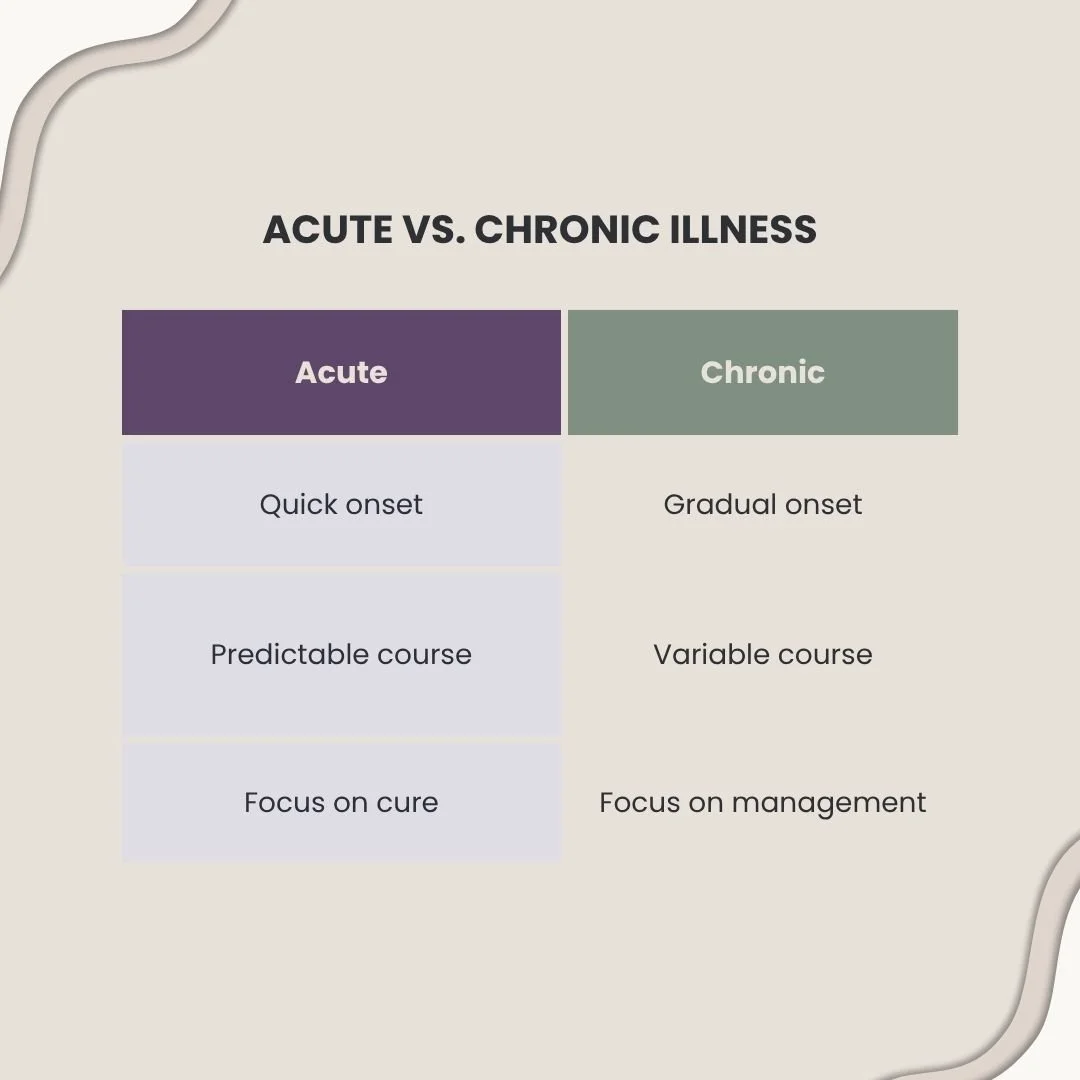
Understanding sleep apnea as a chronic condition—not an acute illness—can help explain why successful treatment focuses on long-term management rather than a one-time cure.
Here’s a way to think about the differences between acute and chronic health problems. Acute illnesses generally have a rapid onset, a predictable course, and are often curable. Chronic illnesses usually develop over time, have multiple contributing factors, and require ongoing involvement rather than a one-time cure.
For many people, sleep apnea fits much better into this second category. Recognizing that shift can help explain why adjusting emotionally to CPAP sometimes takes longer than expected.
Barrier #4: Part of You Wants to Use CPAP—and Part of You Doesn't
This might be one of the least acknowledged barriers. You can fully understand that CPAP is important...and still not want to use it. Those two things can both be true. Psychologists call this ambivalence: having simultaneous conflicting feelings about a decision or behavior.
You feel these things:
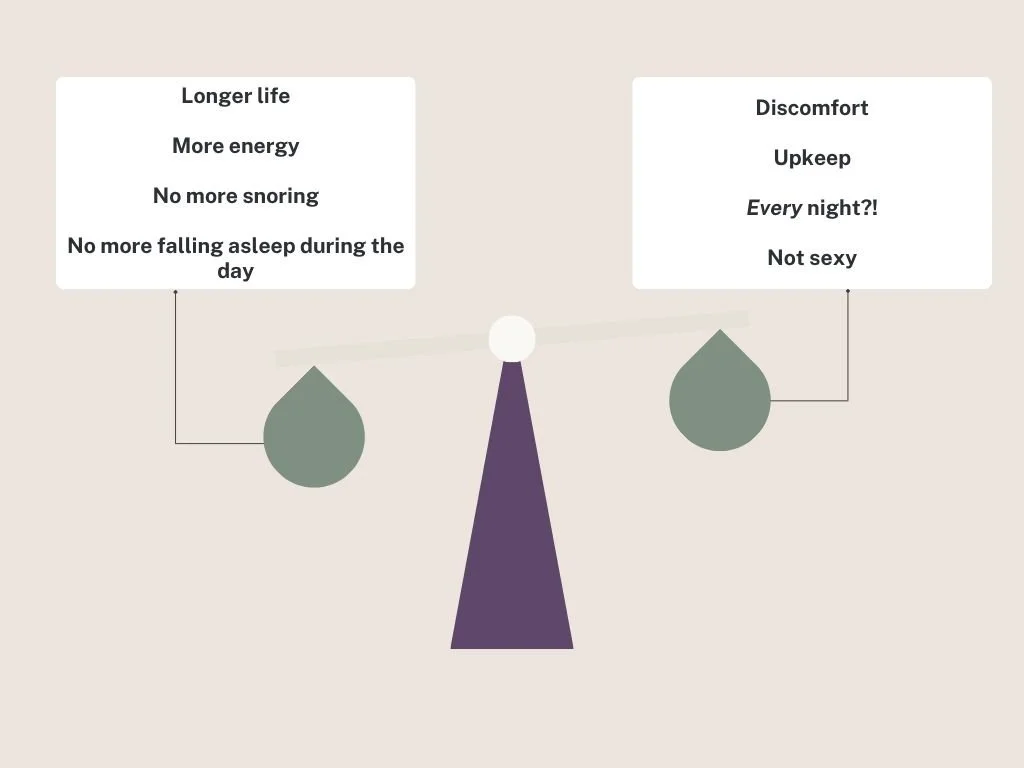
Mixed feelings about CPAP are normal. You can genuinely want the benefits of treatment while also disliking parts of using the equipment. Recognizing that ambivalence is often the first step toward making intentional, long-term changes.
"I want to live longer."
"I want more energy."
"I don't want to snore anymore."
"I don't want to keep falling asleep during the day."
And also these:
"This thing is uncomfortable."
"I hate cleaning it."
"I don't want to wear this every night."
"What if I never get used to it?"
"How am I supposed to date with this thing?"
Neither cluster is true at the expense of the other. Both are trying to protect something important. The problem isn't that you're ambivalent. The problem is pretending you're not.
When people feel wrong for having mixed feelings, they often avoid using CPAP altogether. Instead, I encourage people to get curious. What are the advantages of using CPAP? What are the disadvantages? Let’s acknowledge that there are downsides to any healthy behavior. I’m middle-aged, and still don’t think vegetables taste good.
What do you hope your life looks like a year from now? What gets in the way of moving toward that future? Any significant behavior change comes with ambivalence. Once people understand both sides of their motivation, they're better able to make intentional decisions about using CPAP consistently instead of reacting emotionally in the moment.
Common Questions About Getting Used to CPAP
-
There isn't one set amount of time it takes to get used to CPAP. Some people adjust quickly, while others need more time to find the right mask, address side effects, or become comfortable sleeping with the equipment. If you're still struggling, don't assume you simply need to try harder. Figure out what's making CPAP difficult to tolerate and address that specific problem.
-
First, figure out whether the CPAP equipment itself is keeping you awake or whether you also have insomnia. Problems such as an uncomfortable mask, air leaks, pressure, or dryness should be addressed with your doctor or DME company. If you're spending long periods awake despite resolving those problems, insomnia may need to be treated separately. CPAP treats breathing interruptions; it does not directly treat insomnia.
-
CPAP desensitization is a gradual process of becoming more comfortable with the CPAP mask and air pressure rather than immediately trying to sleep with it all night. It can be particularly helpful for people who experience CPAP anxiety or claustrophobia. The process uses gradual exposure, allowing your brain to learn over time that wearing the equipment is safe.
-
Yes. Insomnia and obstructive sleep apnea commonly occur together, a combination known as COMISA (comorbid insomnia and sleep apnea). Someone with COMISA may need treatment for both conditions. CPAP treats the breathing interruptions associated with sleep apnea, while Cognitive Behavioral Therapy for Insomnia (CBT-I) targets insomnia.
-
Not necessarily, but obstructive sleep apnea is often a chronic condition requiring ongoing treatment. Whether you continue to need CPAP depends on your individual sleep apnea and whether anything meaningfully changes the underlying condition. Don't stop CPAP on your own because your symptoms improve; talk with your sleep medicine provider about whether reevaluation or repeat testing is appropriate.
The Bottom Line
Most people think using CPAP successfully is simply a matter of discipline. In my experience, that's rarely the whole story. Sometimes the barrier is mechanical. Or anxiety is getting in the way. Maybe untreated insomnia is the issue. Perhaps you are wrapping your head around a chronic and potentially lifelong diagnosis. It’s also possible part of you simply isn't convinced the effort is worth it yet.
Each of those barriers has a different solution. If you’re struggling to get used to CPAP, the goal isn't to force yourself to "just use the machine." The goal is to identify what's actually standing in your way and address that specific problem. Once you do that, using CPAP often becomes much easier than trying to push through obstacles that no one ever acknowledged in the first place.
If you've addressed the equipment problems and are still struggling to use CPAP, I offer behavioral support for CPAP adherence to adults in Austin and throughout Texas. Learn more about CPAP support therapy or reach out to schedule a consultation.
About the Author
Jessica Fink, LCSW-S, is a therapist in private practice in Austin, TX. She has 19 years of experience in the mental health field, and her practice specializes in sleep disorders and behavioral sleep medicine, including behavioral support for CPAP adherence. She is a member of the American Academy of Sleep Medicine and the Society of Behavioral Sleep Medicine.
Last updated: August 2026