What Do Nightmares Mean? (Probably Less Than You Think)
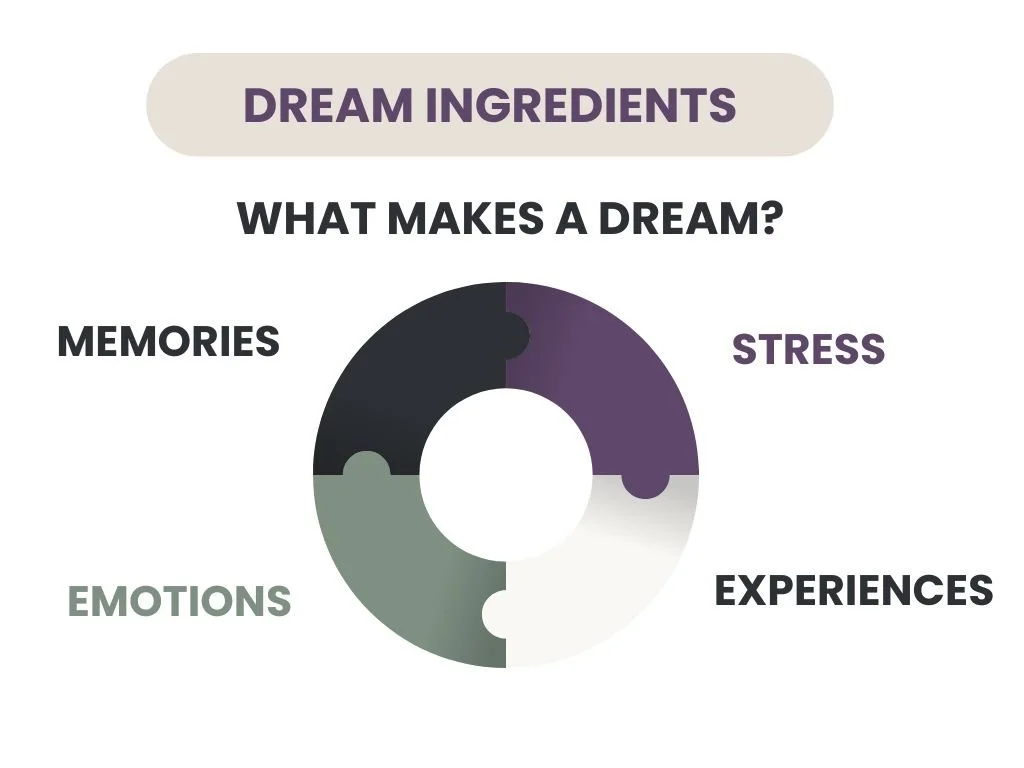
Our brains build dreams from many different "ingredients." Understanding that process is often more helpful than searching for one symbolic meaning.
We all speculate about what our dreams mean. Why wouldn't we want to understand why our brains create storylines about our teeth falling out, being naked in public, or suddenly realizing it's the day of the final exam and we haven't gone to class all semester?
I have all of those dreams too. In fact, I'll touch my teeth after I wake up just to make sure they're still there. Once, out of curiosity, I Googled what dreams about your teeth falling out supposedly mean. I was informed it meant I was telling lies.
Hopefully, you haven't just lost all faith in me. But that little Google search pretty well captures how I feel about dream interpretation. It can be fun. It can be interesting. I just don't think we can confidently know what a dream means.
Why We Want Dreams to Mean Something
Humans like stories. We're pattern-seeking creatures, even when there isn't actually a pattern. Think about looking up at the clouds and seeing animals, faces, or other familiar shapes.
We're also meaning-making creatures, especially when something is frightening or emotionally significant. Dreams—and nightmares—fit right into that tendency.
If you've been having the same nightmare for months or years, it makes perfect sense to wonder whether your brain is trying to tell you something important. Curiosity is a perfectly reasonable response. Certainty is where I urge caution.
What Sleep Scientists Think About Dreams
Why do we dream? The short answer is that we don't know for sure. There are several leading theories.
Some researchers think dreams help us process emotions. Others think dreams help consolidate memories or solve problems. Still others think dreams may simply be a byproduct of an active brain during sleep. Maybe it's some combination of all of the above.
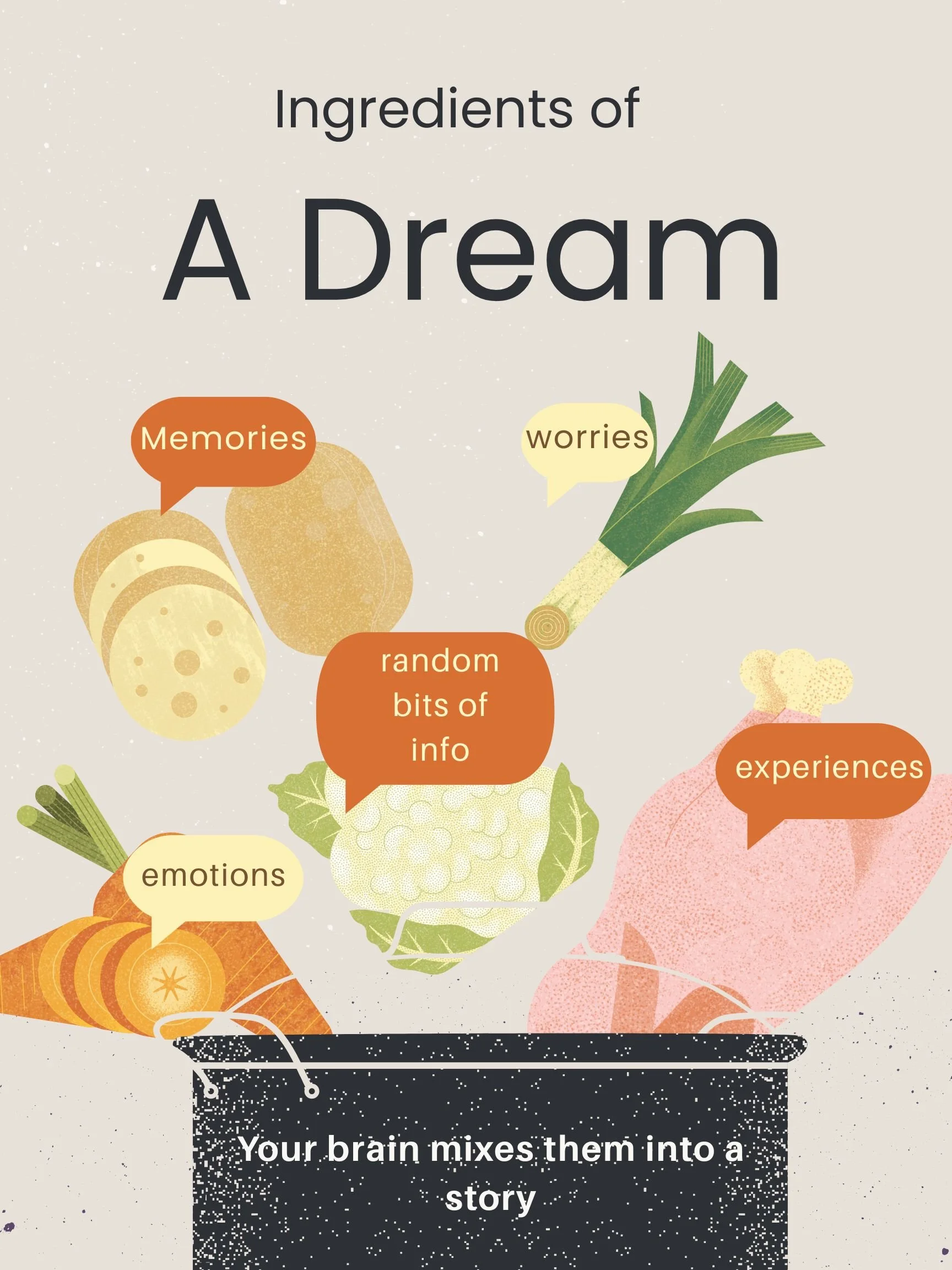
Think of dreams as your brain making soup with whatever ingredients happen to be available—memories, emotions, worries, experiences, and sometimes completely random bits of information.
As I mentioned earlier, our brains naturally organize experiences into stories. Sometimes dreams closely resemble real life. Other times they're only loosely connected. I've heard dreams compared to an adapted screenplay based on a novel. Sometimes the movie stays pretty true to the book (The Godfather). Sometimes the movie completely frustrates the book fans (I Am Legend). And sometimes you find yourself in a car being driven by a talking dog, and the car moves sideways because, apparently, that's just how dogs drive in your dream.
Yes. That was a real dream I had.
Why I Don't Spend Much Time Interpreting Dreams
I don't spend much time interpreting dreams. Sometimes this surprises people. Curiosity is fine, and you're not wrong for wondering. But I don't think I can confidently tell you what your dream means.
Could we speculate? Absolutely. Maybe your nightmare reflects stress. Maybe your brain is trying to make sense of something difficult. Maybe it's simply combining memories, emotions, worries, and random experiences into one strange story. Think of it like making soup with whatever ingredients happen to be in the kitchen.
But speculation will never be certainty. I'm not comfortable presenting an interpretation as fact when we have no way to verify it. More importantly, I don't think we need to know exactly why a nightmare started in order to help it stop.
Whatever caused the nightmare, the treatment is largely the same. That's where I prefer to spend our time.
What OCD Taught Me About Thoughts—and Dreams
Earlier in my career, I worked extensively with people who had OCD. People with OCD often fear that their intrusive thoughts are true or reveal something terrible about who they really are. Trying to dig deep and uncover the "real meaning" of those thoughts usually makes the problem worse.
The gold-standard treatment for OCD is Exposure and Response Prevention (ERP), which teaches something very different. Thoughts are just thoughts. They're products of a brain, the way urine is the product of kidneys. They aren't inherently true, and they aren't a reflection of your character.
I think of dreams in a similar way. Just because your brain generated a dream doesn't necessarily mean it's revealing some hidden truth about you. Brains produce all kinds of strange things. That's part of being human.
Does That Mean Dreams Are Meaningless?
Not necessarily. Dreams can absolutely reflect what's happening in our lives. People often have more disturbing dreams during stressful periods. For some people, dreams also have important cultural or spiritual significance.
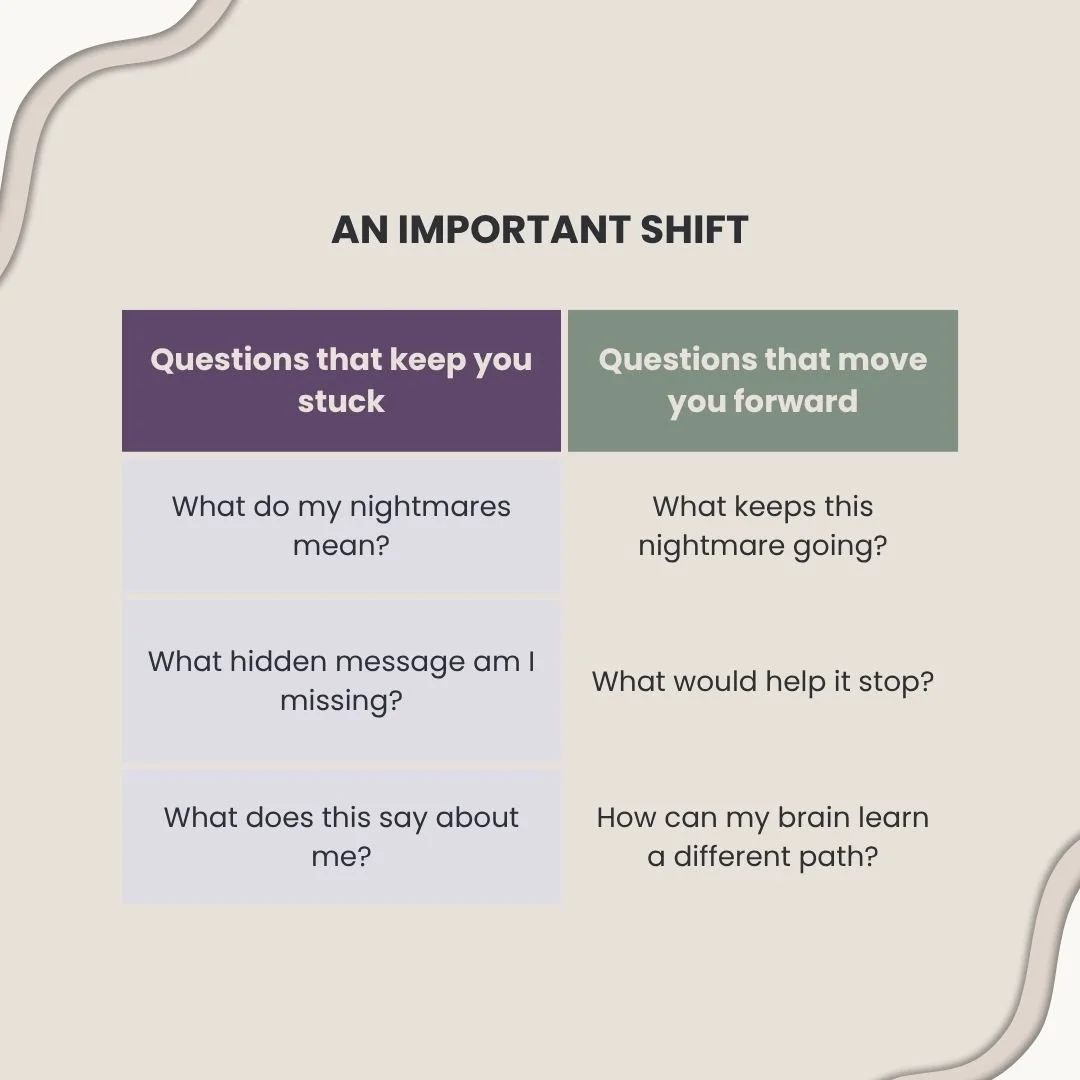
Asking how to stop nightmares is often more helpful than trying to decode their meaning.
But if we're talking about nightmares that are ruining your days and your nights, I don't think we gain much by trying to decode hidden symbolism—at least not if the goal is to make the nightmares stop.
The Better Question
When people ask me, "What does my nightmare mean?" I gently try to shift the conversation. Instead of asking, "What does it mean?" I think a more helpful question is, "What would help this nightmare stop?" That question moves us from speculation to action. From trying to decode the dream to helping you sleep better.
The Good News
Whether your nightmare has deep personal meaning, reflects stress, resulted from trauma, or is simply your brain doing something strange while you sleep, it doesn't have to keep happening. The brain learned something. The brain can learn something different.
If you'd like to learn more about how behavioral treatment for nightmares works, read my article Nightmare Treatment: Why You Don't Have to Live With Chronic Nightmares.
If you've been wondering why the same nightmare keeps repeating, you might also enjoy Why Do I Keep Having the Same Nightmare?
If you’d like to explore the many causes of nightmares (it’s not just trauma!), check out Are Nightmares Always A Sign of Trauma?
Curiosity Is Fine. Be Skeptical of Certainty.
If you enjoy thinking about the meaning of your dreams, there's nothing wrong with that. I think it can even be fun. Where I urge caution is when someone confidently tells you exactly what your dream means. We simply don't have a way to verify those interpretations.
For me, the more useful question has never been: "Can we solve the mystery?” It's: "Can we help you sleep better?" Thankfully, the answer to that question is often yes. I offer CBT for Nightmares, an evidence-based treatment for nightmares, for people in Austin and across Texas via telehealth. If this sounds useful, request your free consultation today.
About the Author
Jessica Fink, LCSW, has 19 years of experience in the mental health field. She specializes in sleep disorders, including nightmares, and has completed training and consultation in Cognitive Behavioral Therapy for Nightmares.